
The Warning Hidden in a Book
The IPCRESS FileLiterary references and coded messages offer the narrator an informal route through a world where direct speech is dangerous.
increasing Bearing strength in each event
 decreasing
Bearing strength in each eventdecreasingA Habit of Reading

A Habit of Reading
Books as Formation
The narrator is portrayed as a lifelong reader who moves among history, philosophy, fiction, and reference books. His broad reading becomes a practical resource rather than a decorative accomplishment.
A Private Vocabulary
Literature gives him ways to recognize allusions and communicate beyond official codes. In a profession organized around deception, shared texts can carry meanings that appear harmless to outsiders.
The thread links the narrator’s inner life to the practical methods by which he survives.
Artemidorus’s Cable
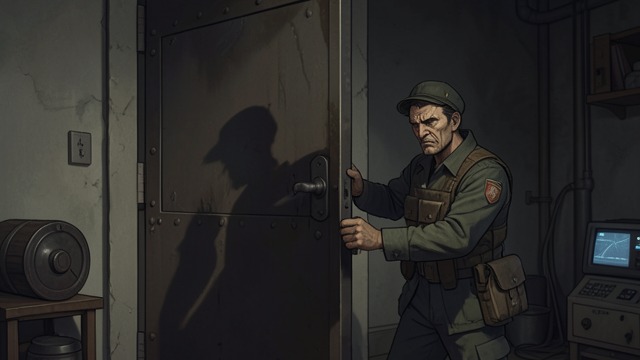
Artemidorus’s Cable
A Quotation Arrives
The narrator receives a cable signed Artemidorus and recognizes its connection to a warning in Julius Caesar. The message advises caution around a circle of trusted men.
Meaning Through Memory
The message works because the narrator knows the play and because Charlie knows that he knows it. The source and significance remain concealed from anyone who sees only the words.
Literary knowledge becomes a practical security channel at a moment when formal contact is dangerous.
A Shared Milton Passage

A Shared Milton Passage
Recognition by Quotation
The narrator asks Charlie to meet by beginning a passage from Paradise Lost. Charlie completes the lines and immediately understands that the request is genuine.
A Safe Meeting Place
The quotation lets them arrange a meeting without stating the location or the danger on an exposed telephone line. Shared literary memory supplies authentication without a written codebook.
The exchange turns education and friendship into a compact operational safeguard.
The Book as Cover
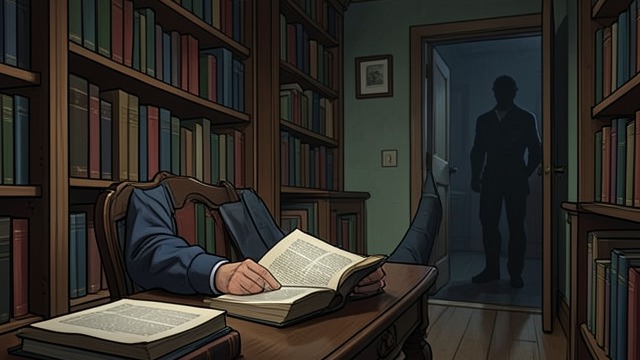
The Book as Cover
A Reference in the Library
The narrator checks the Shakespeare volume in the General’s library to confirm the cable’s allusion. His knowledge lets him recognize the warning without drawing unnecessary attention.
A Moment Before Crisis
The literary passage arrives just before he learns of Barney’s reported accident and drives toward the restricted road. The book’s warning is accurate in spirit but cannot explain every danger ahead.
The scene shows how a message may offer direction without delivering certainty.
A Code of Mutual Knowledge

A Code of Mutual Knowledge
A Network Beyond Paper
The narrator’s literary exchanges with Charlie belong to a wider pattern of personal signals, debts, and understood omissions. These relationships can carry information that formal systems cannot safely transmit.
Limits of the Signal
A quotation can identify a trusted contact but cannot guarantee that the contact is safe or that the message will prevent harm. The code preserves a possibility of help, not certainty.
The thread returns to the novel’s central balance between knowledge and doubt.
During the narrator’s early life as described in the introduction
During the Tokwe garden party, after midnight
After the escape, during the narrator’s call to Charlie
During the General’s party, before the explosion
Near the ending, after the narrator recounts the conspiracy
